 In big construction projects, subcontractors are usually hired to assist main contractors in completing the projects. While main contractors take care of bidding and winning job contracts from project owners or prospective clients, subcontractors provide their unique sets of skills and perform specific jobs such as painting, roofing, electrical installation, plumbing, etc. If there are so many subcontractors working with you, management can be a challenging thing. Take a look at the guide below, we will help you note down the important stuff!
Pre-qualification
A pre-qualifying subcontractor is an essential process for all main contractors. During this stage, they will assess the project’s needs, request for quotations (RFQs) and proposals (RFPs) from subcontractors. This stage will make sure that you choose the right subcontractors. Accordingly, it is advisable for main contractors to:
- check again their previous clients and projects to gain an overview of delivering solid work;
- compare several subcontractors with competitive offer packages, licenses, and certifications;
- check their claims and safety records;
- ask for any legal history.
Insurance and Licensing
It is absolutely critical to ensure that any subcontractors you work with should be licensed and insured. This aims to avoid legal issues and make sure who will be responsible when there is injury or damage. If the subcontractor is uninsured or is irresponsible for their crews, the injured party could sue the property owner who could turn around and make a claim against you. Make sure that you include insurance and licensing in the agreement, it will help you easily avoid this.
Obligation and Duties
When it comes to subcontractors, there are many essential obligations that contractors must comply with. For instance, one of these obligations is Persons Conducting a Business or Undertaking (PCBUs) which ensures the health and safety of all workers at work in the business or undertaking. It includes:
- who are engaged or are caused to be engaged by the PCBU.
- whose activities in carrying out work are influenced or directed by the PCBU.
Understanding obligations and duties is critical as it can help contractors have a safe site and ways of working; make sure all facilities are handled and stored safely; control risk, health, and workplace conditions with important information, training, and supervision; and remain good relationships and communication amongst parties.
Subcon Contracts
Depending on the type of projects and subcontracted jobs, there will be types of relevant contracts.
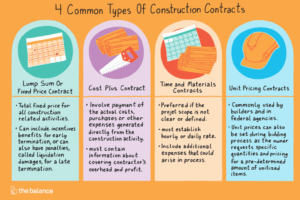
- Lump-sum or Fixed Price Subcontract: Main contractors use this type of contract when they already have their own estimations for the projects. This can be risky for main contractors as they give the quantities in the bidding process. If the actual quantities exceed the contracted amounts, then the subcontract numbers increase via change orders or variations which all contractors have to properly keep track of to make sure the cost overruns are not critical. Main contractors may assume the exceeded cost since most projects go over budget.
- Cost-plus Subcontract: This cost-plus method is more useful between the owners and the main contractors. However, it is rarely used between the main contractors and subcontractors. It helps to reduce the risk of invalid estimations hurting the project outcome but increases dependency on the subcontractor as they are in charge of finding the best offers.
- Time & Materials Subcontract: In this type of contract, the subcontractors will divide the costs into the labor and the materials cost instead of a fixed cost for a job. Therefore, main contractors can get a better price when comparing bids to potentially bargain with the subcontractors.
- Unit Price Subcontract: This method does not necessarily define the quantities of work done. It just provides the cost per unit (hour, meters, etc), and the total cost of this contract depends on how much work was done at the agreed price. Unit price subcontracts are often for the case that main contractors have not defined the design of the job yet and they assign the same job to multiple subcontractors to finish the project faster.
Project Planning
Since subcontractors are crucial parts of the project, you should invite them to join during the pre-construction phase, particularly, planning. Particularly, it is necessary to inform them:
- Workflow and master scheduling
- Materials procurement
- Safety concerns
- Costing and payment terms
- Other concerns that may affect the subcontractors’ work
Using the Building and Construction module in ERP systems can be a solution to help you in the above practices. With the features of project tracking & claim management, approval & report generation, hr & accounting, etc., they will allow gaining better planning and a higher success rate in project proposals, control costs within budget, and smoother execution.
Payment Control
In the construction industry, good payment management is a big challenge. Even if all parties submit the paperwork on time, the billing and invoice can be left hanging for weeks or months. In this case, construction sectors should convert to digital invoices. Synergix ERP software offers E-invoicing with InvoiceNow with project budget control and reminder. Thanks to this, you can enhance proper invoicing as it is a way to ensure you pay/get paid on time and to keep your company away from negative cash flow.

All in all, we hope that this article may help you understand how to manage subcontractors more confidently and effectively. If you need more help in construction management or have an interest in any ERP solutions, feel free to have a talk with us.