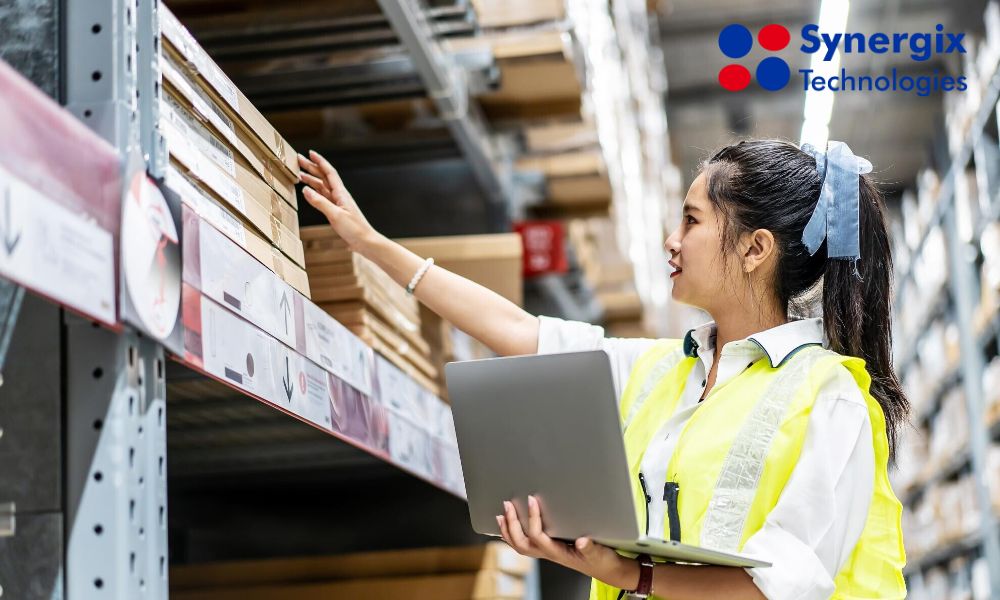
It is still evident that many SMEs in Singapore are using manual process in managing their supply chain. These manual processes are likely to result in a lack of control and inventory problems as logistics costs increase, and suppliers’ networks become more regional.
The use of cloud-based supply chain software is gaining popularity due to the fact that it offers obvious operational advantages. As industry studies reveal, more than 68% of the manufacturers worldwide are currently employing cloud based supply chain solutions and the users of the solution have reported a 24 percent increase in accuracy of order fulfilment and a 19 percent decrease in holding inventory costs.
Cloud solutions are an efficient means of enhancing control without excessive initial investment. These advantages are most pronounced in the cases when supply chain operations are combined with the ERP system, where inventory, sales and finance are based on one data.
What Is Cloud-Based Supply Chain Software?
Cloud-based supply chain management (SCM) software assists a business in planning, implementing, and controlling all the operations of sourcing, procurement, production, and logistics through an internet-related service. Cloud SCM utilises remote servers controlled by the software provider unlike the traditional on-premise systems that need servers and IT infrastructure.
The core components include:
- Inventory control to track the stock in every different locations.
- Purchase orders and vendor relationship procurement and supplier management.
- Fulfilling orders to receive and deliver to customers.
- Planning and forecasting demand to make future inventory predictions.
- Tracking Placing orders and monitoring the delivery of goods in real-time.
The flow of work within an integrated system has no interruptions: Purchase Order > Goods Receipt > Inventory Update > Sales Order > Delivery > Invoice > Financial Reporting. The step automatically notifies the next one, which means that you will not be asked to enter the same data twice and thus the accuracy will be maintained throughout your business activities.
In the case of SMEs, the cloud architecture brings them three short-term benefits, namely, reduced initial expenditure than on-premise software, reduced deployment time, and reduced IT projects, and automatic updates, respectively.
Read more: What Is Cloud ERP & Why Do Businesses Need It?
Standalone Tools vs ERP Supply Chain Solutions
When SMEs consider the cloud-based supply chain software, most of them begin with entry-level tools that comprise a single function like inventory or logistics. These tools may be helpful; however, they usually do not work in conjunction with accounting systems, sales systems, and purchasing systems.
Limitations of Outdated Cloud SCM Tools
Standalone tools can create operational gaps:
- Information is stored in several systems resulting into duplication.
- Inventory, orders and financial records have to be reconciled manually by teams.
- Accounting and stock and cost data may not necessarily be similar.
- The speed and reliability of reporting is reduced.
Over time, these issues increase manual work and make it harder to get a clear view of the business.
Why ERP Supply Chain Solutions Are Better
In ERP integrated solutions, the linking of the supply chain tasks with the business operations is realised. This allows:
- One set of data that can be used throughout the departments.
- Change in inventory to be reflected immediately in finance and reporting.
- Enhanced purchasers, sale and operation co-ordination.
- Better business insights that are timely and more accurate.
In the case of SMEs, the integration will eliminate complexity and aid in improved decision-making as the business expands.
Here’s the difference in practice:
| Traditional SCM | Cloud ERP-Integrated SCM |
| On-premise | Cloud-based |
| High upfront | Subscription |
| Manual updates | Auto updates |
| Limited integration | ERP-ready |
| Data silos | Single data |
A lot of cloud SCM solutions appear to work well during demonstrations and fail when they are unable to integrate with the already existing ERP systems. The maintenance expenses of having several systems that are unconnected are usually more than the savings of using a cheaper stand alone system.
Read more: Local ERP vs Cloud ERP: Which is Right for Your Business? – Synergix Technologies ERP System

Benefits and Essential Features of a Standard Cloud Supply Chain Software
In the case of Singapore SMEs, cloud-based SCM software brings value when it addresses actual operation issues, and not when it introduces additional functionality.
Key Benefits
- Live visibility: A business is able to view the inventory, order status and supplier performance under a single platform.
- More cost and cash flow management: Accurate information on stock minimises overstocking and unwanted acquisitions.
- Scalability: The system will be capable of supporting more than a single warehouse, increased order volume, and expansion to the regions.
- Compliance and audit readiness: Excellent record of transactions promotes GST reporting, stock valuation, and financial accuracy.
Essential Features to consider
In looking at the cloud supply chain software, look at the capabilities that can harmonise with your overall business activities:
- Multi-location inventory and warehouse management.
- Automated reordering and procurement, supplier management.
- Quote to delivery sales order and fulfillment.
- Live reporting and dashboards without data compilation.
- Integration with accounting and finance modules
- Third-party logistics connectivity API.
- The warehouse personnel and field operations teams are to have mobile access.
The Reason Why ERP-First Supply Chain Management Is The Best To Use on Singapore SMEs
Majority of SMEs work on a limited IT budget and require systems that can provide value in the shortest time possible. An ERP-first strategy comes in handy to minimise the complexity of the systems and evade disintegrated tools.
Businesses in Singapore also have to deal with:
- GST compliance
- Local and foreign suppliers.
- Multi-entity and Multi-currency operations.
A single integrated ERP system, as opposed to a combination of various separate tools, enables SMEs to handle supply chain, financial, and sales on a uniform and dependable basis. This is where ERP is developed as a basis and SCM is developed as a module (core) but not a system.
How Synergix ERP System Supports Supply Chain Management
Synergix Technologies offers an ERP solution that is made to assist supply chain management as one of the integrated solutions to SMEs in Singapore.
Businesses can now handle their inventory, purchasing, sales and their accounting applications in a single system as opposed to maintaining different tools. The flow of inventory automatically updates the records and the data on sales and purchasing is consistent across the departments.
Synergix ERP Supply Chain Management module include:
- Inventory and warehouse: Keeping track of stock levels in different locations, receipts and issues management, and minimising the number of manual stock adjustments.
- Procurement control: Prepare and track purchase orders, maintain supplier records and track the real time purchasing activity.
- Sales order and fulfillment tracking: Link sales orders directly to inventory availability and delivery status.
- Financial integration: Inventory will be automatically updated with a valuation in the finance module, cost of goods sold and invoicing is updated in the finance module.
- Live reporting: Have the latest stock, purchases, sales and margin reports to make better decisions.
Being a cloud-enabled ERP system that has a local presence in Singapore, Synergix will assist SMEs in achieving supply chain visibility and maintaining operational and financial information of the organisation under a single platform.

Conclusion
Key Takeaways:
- SMEs that are competing in the modern market must have cloud-based supply chain software.
- Oudated tools represent silos of data, whereas the ERP-integrated systems offer a unified source of truth.
- Integration ties inventory, finance and operations to each other and removes manual reconciliation.
- Singapore SMEs require a solution to enable them to meet the GST requirements, multi currency operations and regional trade.
- The ERP-first approach provides visibility, control, and scalability in real-time without the need to continuously adjust the system.
Get in touch with Synergix Technologies to have a free demo of how our ERP solution can facilitate the work of supply chain management of Singapore SMEs.